Together with the Tesicnor team, we developed a virtual reality (VR) experience that enables professionals to train and assess their skills in the commissioning, maintenance and repair of electrical switchgear at wind farms.
Through an interactive simulation that recreates the environment and components of an electrical installation, trainees can practise the full intervention procedure, from selecting the required safety equipment to carrying out each phase of the operation.
The experience supports progressive training, adapting the level of guidance to each user’s knowledge and providing a safe environment in which to practise, identify mistakes and refine how the procedure is performed.
At the end of each session, the system displays a detailed performance assessment, allowing users to review both how they carried out the procedure and a breakdown of the time spent.
Assessed aspects include:
This way, participants can see their results, pinpoint areas for improvement and repeat the exercise to consolidate their skills.
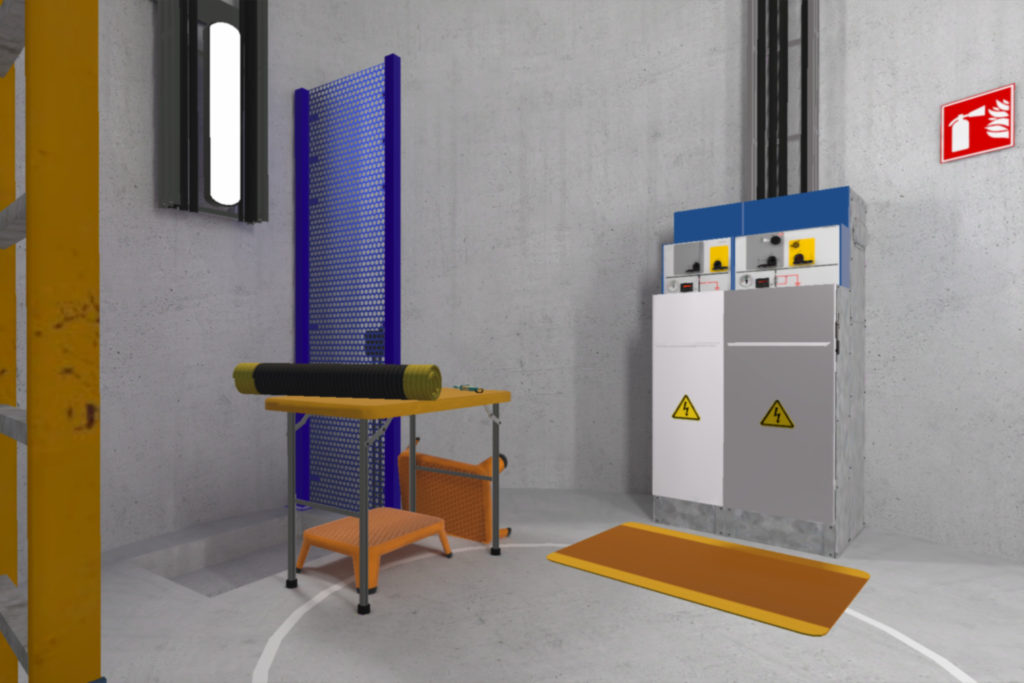
In high-risk industrial environments such as the wind energy sector, proper preparation before working on real installations is essential.
Virtual reality makes it possible to practise these procedures in a training environment, without working on actual equipment, without exposure to the risks involved in this type of work, and without affecting equipment availability.
What’s more, the ability to repeat procedures, face different scenarios and learn from one’s own mistakes helps build skills and boosts workers’ confidence before applying what they have learned in the field.
Training available soon.