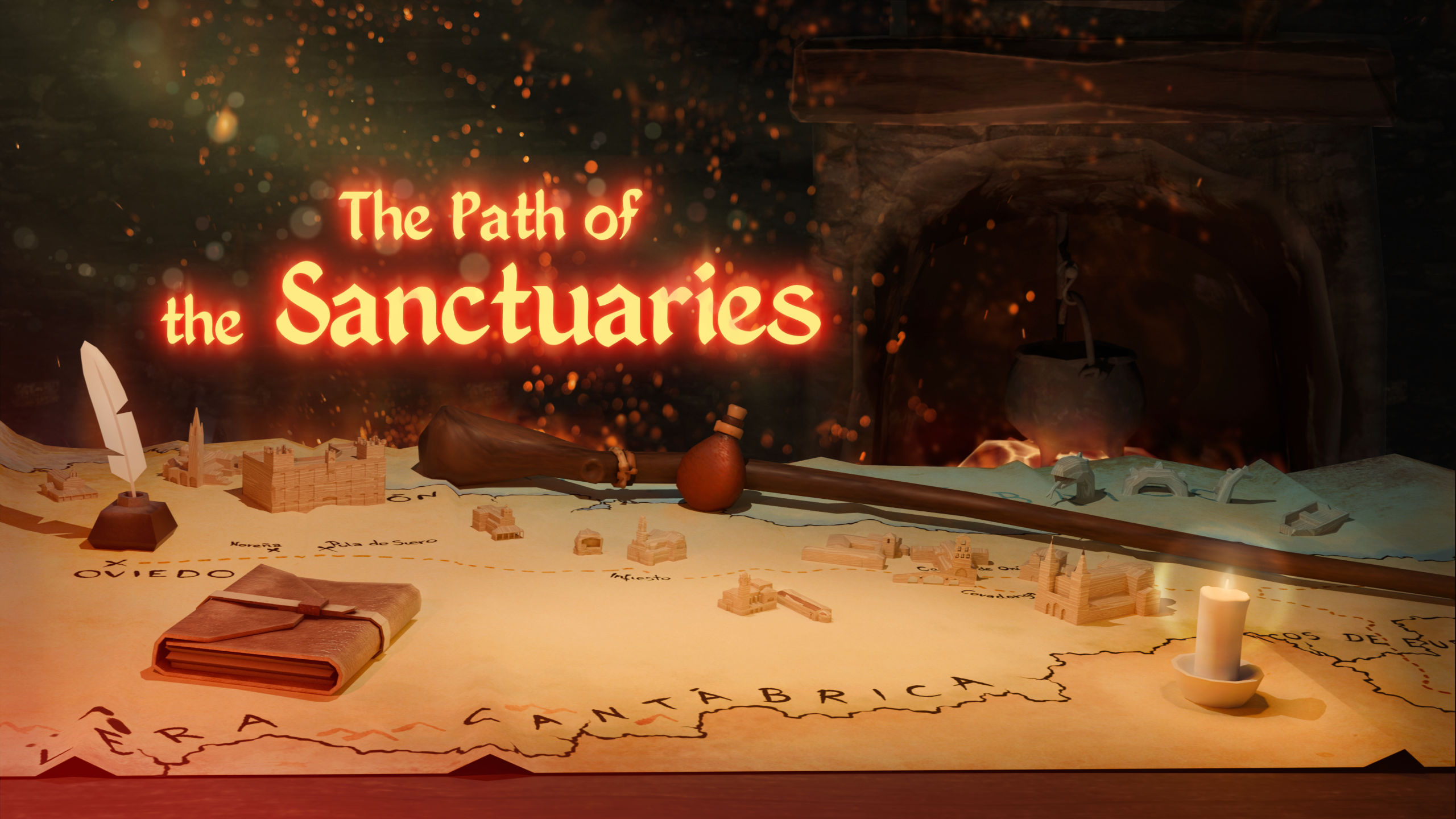
A few weeks ago, we launched our first Virtual Reality (VR) application in the cultural sector, available on the Meta platform. It has been a long journey: years of production and teamwork to offer a truly immersive experience.
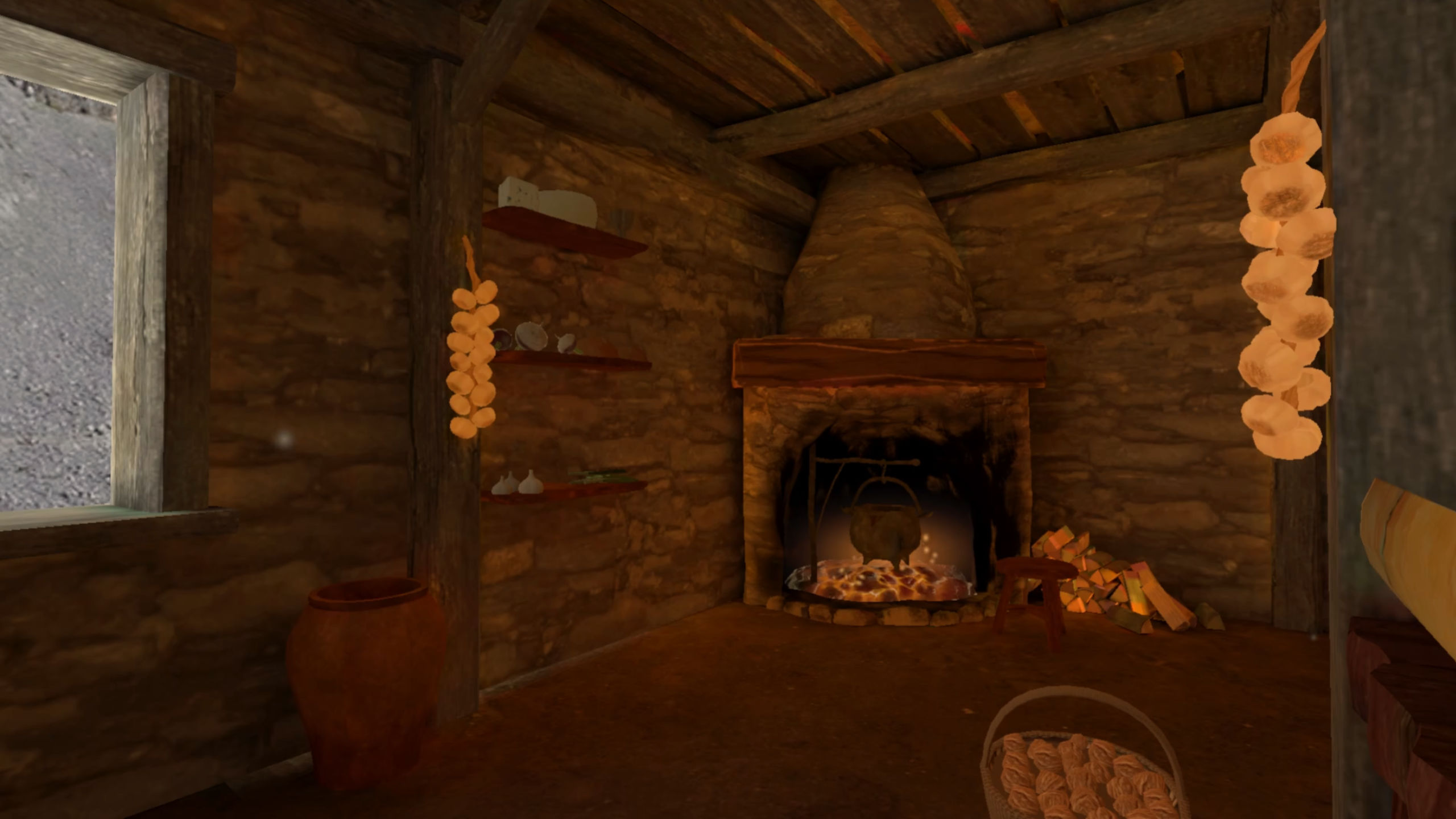
This is not just a 360º video. Above all, it is an experience made up of interactive virtual spaces reconstructed in 3D, transporting us to the era of the first pilgrims, connecting past and future.
To celebrate the official launch of the app, we prepared an interview with Enol Villamor, cinematographer and creative director of the project, in which he shares some of the project’s details and the creative decisions that made this experience possible.
IO: What was the inspiration for creating a documentary about The Path of the Sanctuaries, and how was the format for telling this story decided?
Enol: It all started with a phone conversation with Andrés Martínez Vega (a member of RIDEA), who suggested that this route had been officially established and at that time had very little visibility. We were just looking for a feature film project that had scenic qualities and cultural richness from our region (Asturias), suitable for the 360º video format. After evaluating it, we decided it was perfect to start with.
IO: One of the most notable quotes about the documentary is “not as it has been told to us.” How did you approach the research and selection of these stories?
Enol: I took charge of contacting and interviewing experts on the documentation related to The Path of the Sanctuaries. From there, both verifiable historical accounts and the legends and myths featured in the documentary emerged. That particular quote comes from an interview with Maria Raquel Alonso (Professor of Art History and Musicology at the University of Oviedo), who talks about the movement of the remains of deceased Asturian kings to give influence over a territory. For example, the relocation of King Pelayo from Santa María de Abamia in Onís to Covadonga. In my personal opinion, this is one of the most interesting and possibly lesser-known topics in the documentary.
IO: What was the filming process like, especially considering the equipment needed to capture 360º scenes?
Enol: We were really lucky with the weather. During the year and a half of filming, 90% of the days had great conditions, which was very important for 360º recording. We observed and innovated the way we recorded interviews, making the editing work more efficient. It wasn’t about creating an emotional project solely through the image, but making it more immersive for the user. We experimented with the editing by blending interviews with the natural environment. We filmed several scenes of rivers and small waterfalls for movement and to strongly contrast the natural with the urban.
Giving directions to the actors… it’s very different from anything I had worked on before, especially in a narrative format that doesn’t rely on dialogue but on a connection through time. Most of the time consisted of walking; expressions evolved along the path, and all the emotional and acting weight is conveyed through the voiceovers.
IO: What advantages does the immersive format offer in conveying the story and landscapes?
Enol: The protagonists’ story moves through impulses with different motivations. The medieval pilgrim (played by Manu Lobo) is guided by spirituality, a more intimate motivation that is revealed little by little until the end. The contemporary pilgrim (played by Dimitri Álvarez) starts driven by curiosity and ends up developing an intense connection with his ancestors. Each has their own way of communicating; we didn’t want to differentiate them by mood, but by how their modes of expression reflect the contrast between the before and after of the path.
IO: The documentary has already been presented at events such as Docs Barcelona and FOCO (Oviedo Film Festival). How has the audience reception been in terms of the story and the technology used to tell it?
Enol: It has been quite an experience, and we weren’t sure if it would work. It’s a one-hour feature, and we weren’t certain whether the audience would feel comfortable wearing the VR headset for that long. Surprisingly, most people stayed engaged throughout the entire documentary, paying full attention. I can even say that one of the viewers was Rodrigo Cortés, a director I admire a lot.
IO: The Path of the Sanctuaries is a documentary but also a virtual application that serves as a tool to watch the documentary divided into 5 chapters. How did you arrive at this solution, and what does it offer the user?
Enol: We want the user to be able to focus easily and, above all, to feel comfortable. Dividing the experience into chapters allows each person to decide if they need a break and continue the journey comfortably. Additionally, after completing each chapter, users will see how they earn rewards and can explore a bit of the medieval pilgrim’s room.
This project is just the beginning of what we want to explore: how technology can amplify the way we tell cultural stories. Virtual Reality doesn’t replace physical cultural or tourist experiences, but it does open new ways to experience and feel them.